our
news
AWARDS, ACCOLADES, PUBLICATIONS AND NEWS.

Are you passionate about shaping resilient, vibrant communities? Do you believe in the power of innovative, context-driven design? Plusurbia Design is looking for a creative Urban Designer to join our dynamic team.Position: Urban DesignerLocation: Miami, FLType: Full-TimeResponsibilities:Develop innovative urban design solutions for diverse projects, including master plans, community development, and public space design.
Collaborate with interdisciplinary teams to integrate planning, architecture, and landscape architecture into cohesive urban designs.
Conduct site analyses, conceptual design, and detailed design work, ensuring alignment with project goals and Plusurbia's philosophy.
Engage with communities and stakeholders to gather insights and incorporate feedback into design processes.
Prepare and present design proposals, reports, and visualizations to clients and public agencies.
Stay updated on urban design trends, zoning regulations, and sustainable practices to bring fresh ideas to projects.Required Qualifications and Skills:Bachelor’s degree in Architecture, Urban Design, or related field.
Strong portfolio demonstrating experience with urban design projects, including master plans, public spaces, and community developments.
Proficiency in design software such as AutoCAD, Adobe Creative Suite, Lumion, SketchUp, and GIS.
Excellent verbal, written, and graphic communication skills, with the ability to articulate design concepts clearly.
A passion for sustainable, resilient, and community-oriented design.
Self-motivated with good time management skills.Why Plusurbia Design?Plusurbia Design is an award-winning urban planning and design firm dedicated to creating inclusive, sustainable, and context-sensitive urban spaces. We work closely with communities, stakeholders, and local governments to deliver projects that enhance the quality of life and reflect the unique DNA of each place we touch. Our approach is rooted in the principles of placemaking, community engagement, and sustainable development.Be part of a growing, forward-thinking firm that values creativity, sustainability, and community impact.
Work on transformative projects that make a real difference in urban environments, from Regional Comprehensive plans to neighborhood and district revitalization and design.
Collaborate with a talented and passionate team in a supportive, innovative work environment.
Enjoy opportunities for professional growth and career advancement.Salary and Benefits:Salary – commensurate with experience and competitive in the marketplace.
401K ‘Elective Safe Harbor’ – Up to 3% of salary.
End-of-year performance-based bonus.
Benefits include personal days off, holidays, individual medical, dental, and vision insurance, and short—and long-term disability insurance.How to Apply:We'd love to hear from you if you're ready to contribute to meaningful urban design projects and grow with a leading firm!Send your resume, portfolio, and cover letter detailing your experience and why you’re a great fit for Plusurbia Design to careers@plusurbia.com.Applications that don't meet the requirements will be dismissed. Format the email with the subject line ‘Urban Designer Position.’
Portfolio, Resume, & Cover Letter must be in PDF format attached to the email. Deadline: Applications will be accepted until September 25th, 2024.Plusurbia Design is an equal-opportunity employer. We celebrate diversity and are committed to creating an inclusive environment for all employees.Join us in shaping the cities of tomorrow—today!
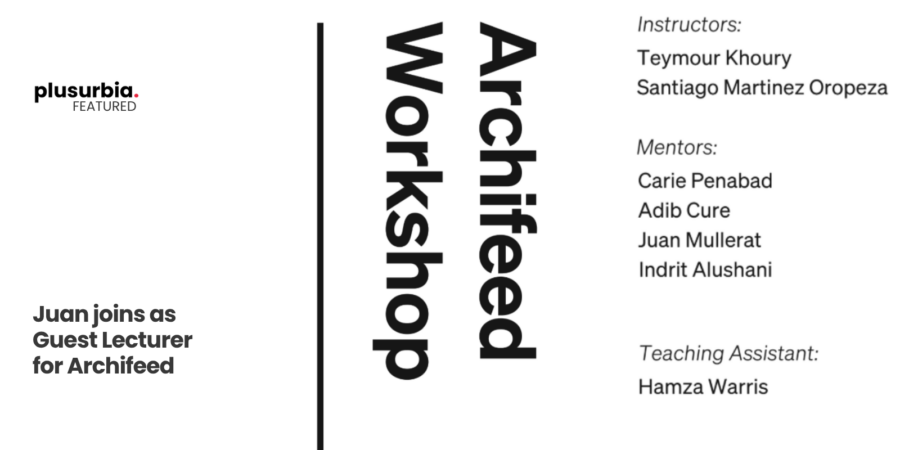
Plusurbia Principal Juan Mullerat participated in the Archifeed Lecture Series at the Coral Gables Museum, joining Indrit Alushani of the University of Miami School of Architecture and Carie Penabad and Adib Cure V. of Cure & Penabad.
The lecture is part of a four-session architecture workshop that also includes a bonus field trip and architectural tour, as well as a certificate of completion for participants.
During the event, Juan shared Plusurbia's approach to design: understanding the history and context of a place before drawing a single line. This philosophy guides the firm's work and reflects its belief that thoughtful design begins with a deep understanding of the communities and places it serves.
Plusurbia is proud to see this perspective shared with the next generation of designers and with community members helping shape the future of Coral Gables.
Learn more about the workshop here.
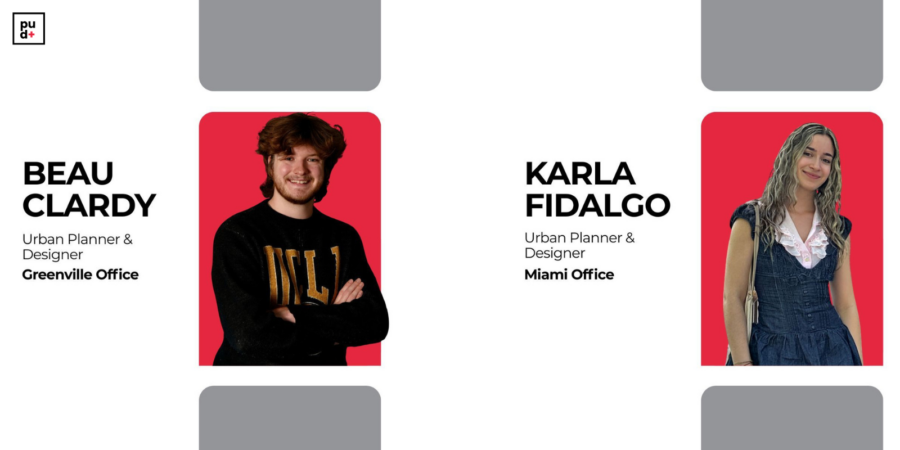
Plusurbia Design is pleased to announce that Karla Fidalgo and Beau Clardy have joined the firm as full-time Urban Planners & Designers. Both began their professional journeys with Plusurbia as interns and have now advanced into permanent roles within the team.Karla will be based in the Miami office, while Beau will work from the Greenville, South Carolina, office. Their transition reflects the firm’s continued commitment to developing emerging talent and strengthening multidisciplinary planning and design capacity across regions.At Plusurbia Design, growth is grounded in collaboration, curiosity, and a people-centered approach to design. Karla and Beau have consistently demonstrated these values through their work, contributing energy and dedication to projects focused on creating thriving, community-driven places.Their advancement marks an important milestone for the firm as Plusurbia continues to invest in professionals who help shape resilient, inclusive, and well-designed communities.
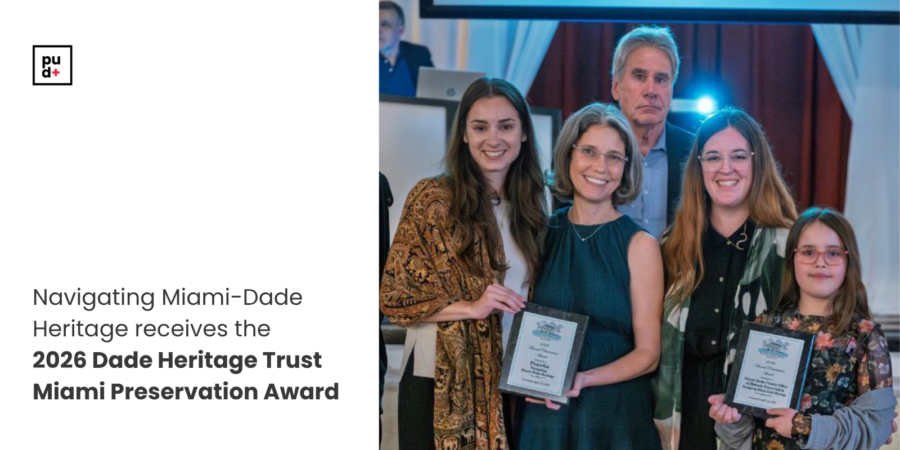
Plusurbia Design, together with the Miami-Dade County Office of Historic Preservation and the Miami-Dade County Department of Regulatory and Economic Resources, is honored to receive the 2026 Dade Heritage Trust Miami Preservation Award for the project Navigating Miami-Dade Heritage.
Each April, Dade Heritage Trust recognizes individuals and organizations whose work advances the protection and celebration of Miami-Dade County’s built heritage and natural environments. Being selected among this year’s honorees reflects the shared commitment behind this work.
The project reinforces a core principle at Plusurbia: successful planning begins with a deep understanding of place. Miami-Dade’s layered history—its neighborhoods, architecture, and cultural landscapes—actively informs how we approach preservation and planning.
We extend our appreciation to Dade Heritage Trust, Miami-Dade County, and the communities across the county whose trust allows us to help interpret and navigate what makes this region worth preserving.
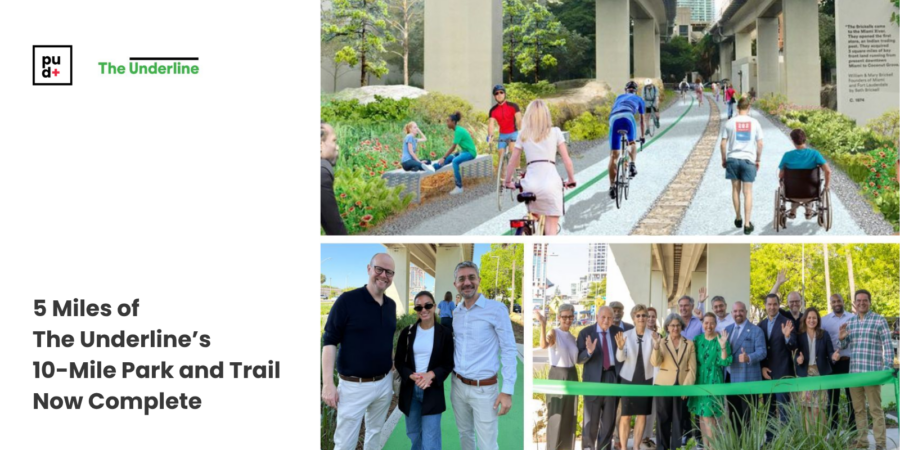
Proud to share that Friends of The Underline has recently reached a significant milestone, completing five miles of its 10-mile linear park and urban trail beneath Miami's Metrorail, connecting Brickell to Coconut Grove and Dadeland.
What began five years ago as a bold vision for how Miami could reclaim its public realm is now a living civic destination where mobility, recreation, culture, and community converge.
Plusurbia Principal and Founder Juan Mullerat, who serves on the Board of Directors of The Underline Conservancy, has been part of supporting this vision as it takes shape across Miami's neighborhoods. His work advancing walkable, connected, and inclusive urban environments reflects the same commitment that drives everything we do at Plusurbia: great places begin and end with people.
Five miles down. Five more to go.
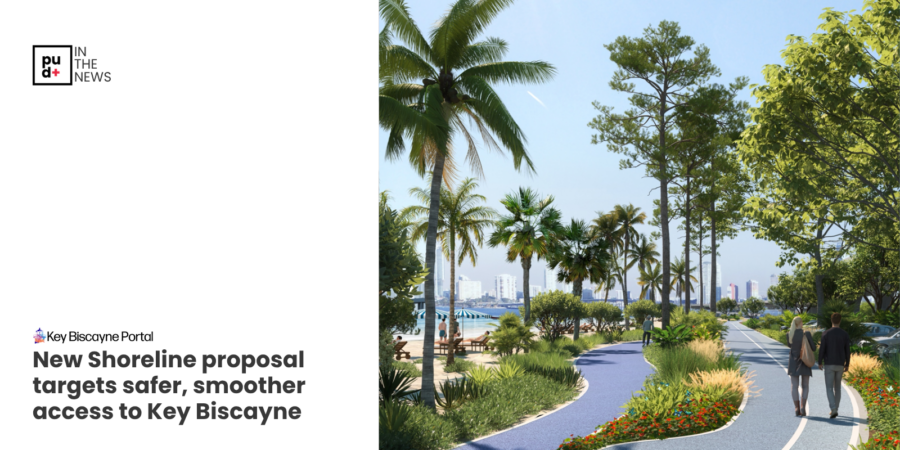
Plusurbia was recently featured in the Key Biscayne Portal in a piece covering the latest progress on The Shoreline, a proposed redesign of the Rickenbacker Causeway that would transform how people move to and from Key Biscayne.The article highlights several key concepts our team has been developing alongside HDR ENGINEERING and Friends of The Underline, including a split-level viaduct that separates fast-moving traffic from pedestrians and cyclists, 160% more beach space below, and improved access to destinations such as Virginia Key, Miami Marine Stadium, and MAST Academy.This project reflects exactly the kind of work Plusurbia was built to do. Complex, context-driven, and rooted in the belief that great infrastructure should serve people first. The Shoreline is not just a transportation solution. It is an opportunity to create a more connected, walkable, and resilient corridor for the tens of thousands of people who use the causeway every day.We believe that understanding a place and its context is critical in planning for the future. That means listening, analyzing, and designing with precision so that bold ideas can become implementable ones.The feasibility study is underway, and the conversation is just getting started.
Read the full article and follow the progress.
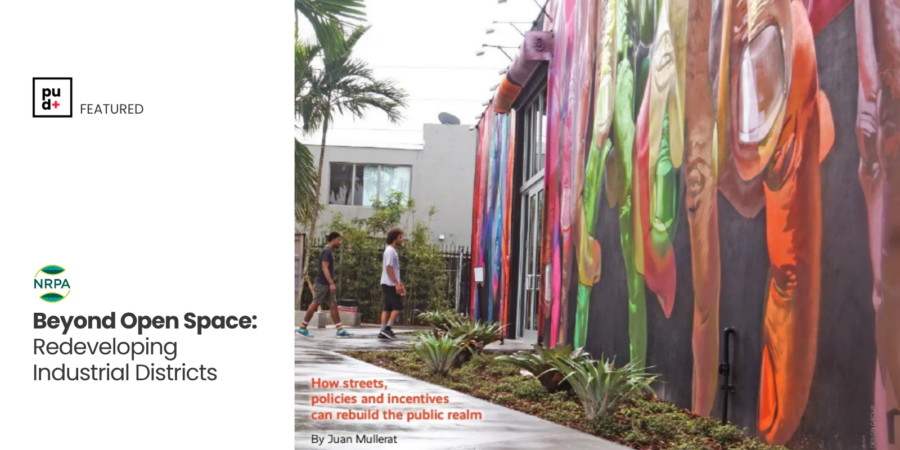
Plusurbia’s Wynwood Vision Plan and NRD-1, examples of how even small interventions can reshape the experience of a dense urban district, are explored further by Juan Mullerat in his latest piece in the May issue of the National Recreation and Park Association. The article examines Wynwood’s evolution from an industrial district into a mixed-use neighborhood, and what it reveals about the future of urban public space.
In places where parks were never planned, and land is limited, cities must take a different approach.
In a place surrounded by art to look at, people still need space to pause and experience nature.
By embedding public realm improvements into zoning, streets, and development, Wynwood reflects a broader shift in how cities can create more accessible, livable environments, where public space is not centralized but integrated into everyday life.
In a place built for visual engagement, the garden adds a space designed to pause and breathe.
Read the full article here.
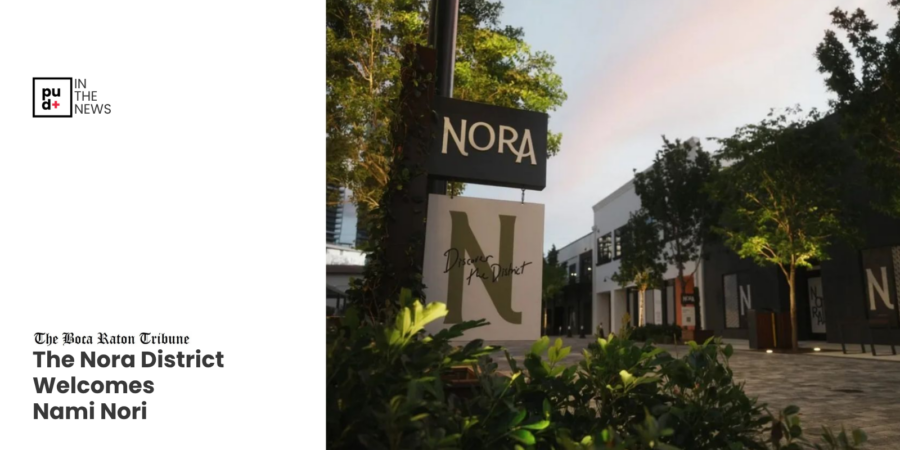
Plusurbia was recently featured in the Boca Raton Tribune in a piece spotlighting The Nora District. The article specifically references our role in shaping the master plan alongside the City of West Palm Beach.Districts like Nora don't happen by accident. They are the result of planning that begins with a deep understanding of place, its patterns of daily life, and its cultural context. When that foundation is in place, it creates the conditions for operators who are equally intentional about their concepts to want to be part of what the place can become.At Plusurbia, we believe the creation of great places begins and ends with people. That means listening and translating what we hear into environments where urban life can unfold naturally and where communities can genuinely thrive.Nora is a living example of what that process produces.
Read more: here
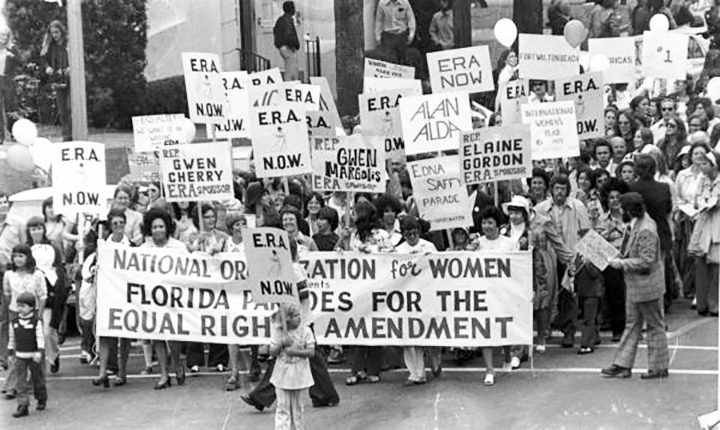
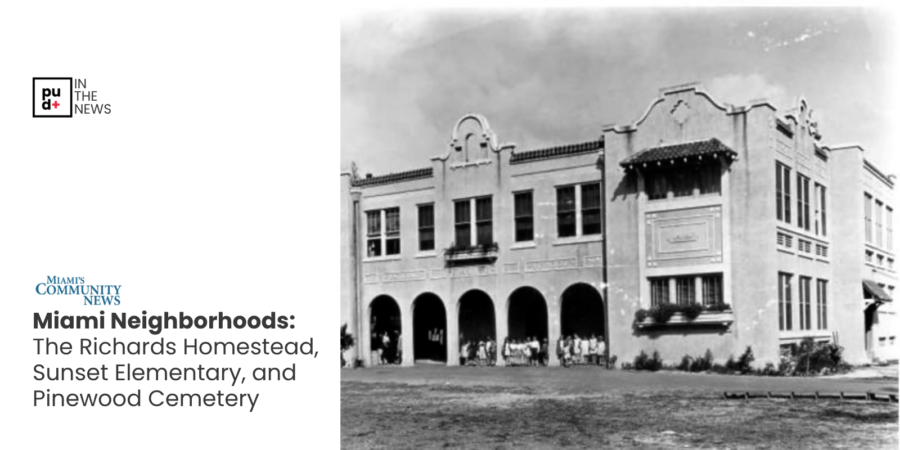
At Plusurbia Design, we believe that preserving historic neighborhoods means preserving the stories that define them. Recently, Megan McLaughlin, Director of Preservation Projects, examined how the history of Miami’s Brownsville neighborhood influenced the advocacy and leadership of pioneering civil rights champion Gwen Cherry.As Florida’s first African American woman elected to the state legislature, Cherry advanced causes that expanded opportunities for generations of Floridians, including efforts to establish Martin Luther King Jr. Day as a state holiday and support for the Equal Rights Amendment.Through preservation research and community storytelling, Plusurbia Design works to document and elevate the people, places, and events that have shaped our communities. Preserving these narratives helps strengthen civic identity and ensures that influential leaders like Gwen Cherry continue to inspire future generations.Read the full tribute to Gwen Cherry in Miami's Community Newspapers article here.
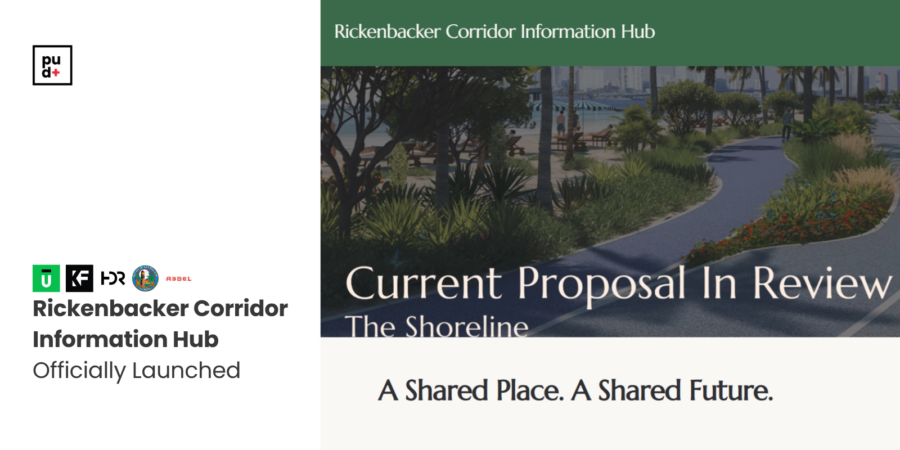
The Rickenbacker Causeway was designed to move traffic. Like most highways, it is defined by asphalt, speed, and capacity. But along Biscayne Bay, infrastructure also defines the health of the shoreline, and the quality of life for the people who use it.Today, the Causeway is more than a roadway. It is the primary connection to Virginia Key and Key Biscayne, and the front door to some of South Florida’s most important parks and coastal ecosystems. It carries vehicles, but it also shapes water flow, habitat continuity, and how people access, experience, and relate to the bay.The Shoreline concept asks a simple question: can infrastructure perform as both a mobility and green system, without compromise, and in a way that better serves people?By elevating through-traffic in strategic segments, it explores how the ground plane could be opened up, not by reducing lanes or capacity, but by reorganizing them. This creates room for restored shoreline conditions, native landscapes, stormwater absorption, and continuous public access along the water’s edge, while improving safety and connectivity for pedestrians and cyclists.This is not a typical highway project. It reframes infrastructure as part of a larger environmental system that supports ecology, resilience, and everyday public life.As part of this ongoing conversation, a new Rickenbacker Corridor Information Hub has been launched by the Key Biscayne Community Foundation, with support from the Knight Foundation, to provide a centralized resource on the corridor’s history, function, and future planning.This effort complements the feasibility study being conducted by Plusurbia Design, in collaboration with Friends of The Underline, exploring how the corridor can evolve as a more integrated system that supports mobility, ecology, and public life. The platform brings together key materials, timelines, and opportunities for public engagement as planning continues.Learn more at rickenbackercorridor.org
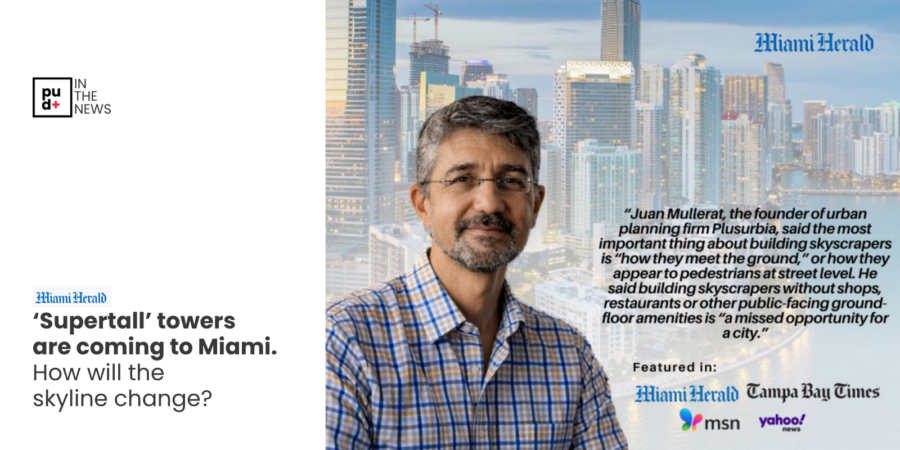
Miami’s skyline keeps making headlines, but cities aren’t experienced from above; they’re lived on the street.In a recent interview with Catherine Odom, Real Estate reporter with the Miami Herald, later syndicated across outlets including Tampa Bay Times, Yahoo News, and MSN, Plusurbia Design's Principal, Juan Mullerat, emphasized that a consistent oversight in high-rise development is that the relationship between towers and the street is often treated as secondary, when it should be fundamental.As new towers rise, their true impact is determined not by height, but by how they meet the ground. The base of a building shapes the public realm, influencing walkability, economic activity, and daily social interaction. When designed with intent, ground floors can reinforce the continuity of the street, support local businesses, and create environments where urban life can unfold naturally.At Plusurbia, this perspective begins with a deep understanding of a place, its people, patterns of daily life, and cultural history, and translates that insight into design that is built to endure.We believe buildings must add value to cities and must be built to serve the public at the street level.Read the article here.
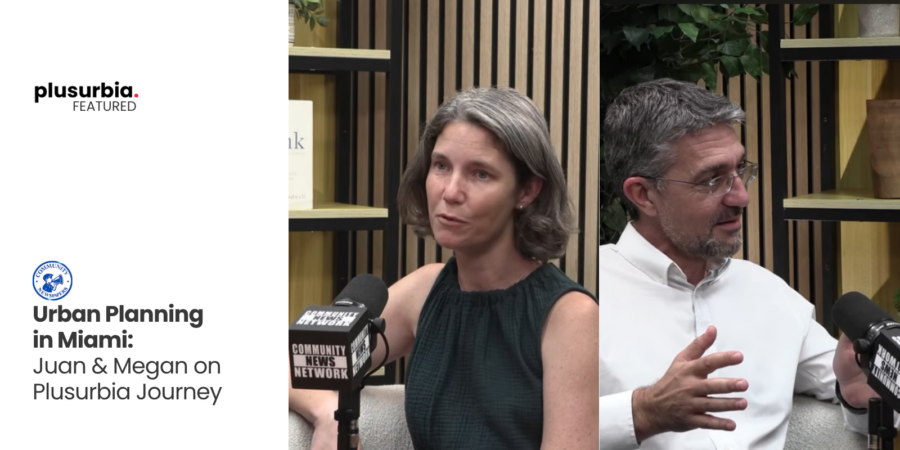
Real change in cities doesn’t happen overnight; it takes decades. At Plusurbia Design, we often talk about how planning is a long-term commitment, with impacts that can take 30 to 40 years to fully take shape.In a conversation with Harry Gotlieb from Miami's Community Newspapers, Juan Mullerat and Megan McLaughlin reflected on 20 years of progress made across Miami-Dade County and what still lies ahead.Because the cities we experience today were planned decades ago, and the decisions we make now will shape what comes next.
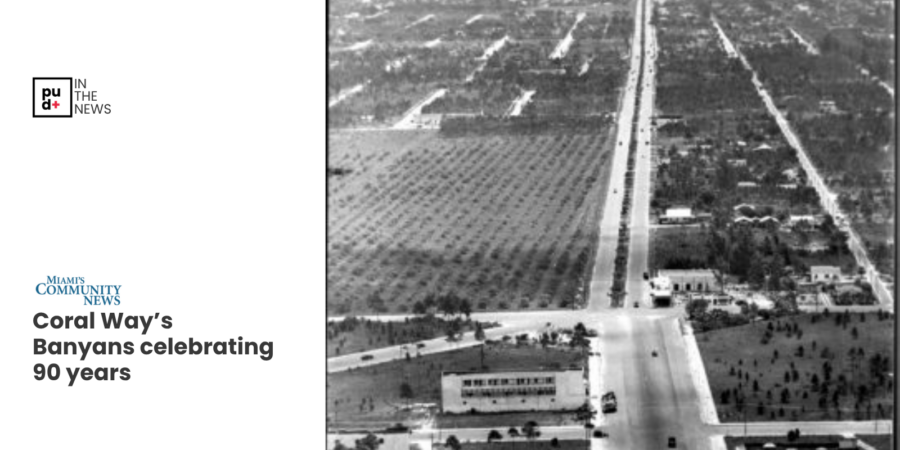
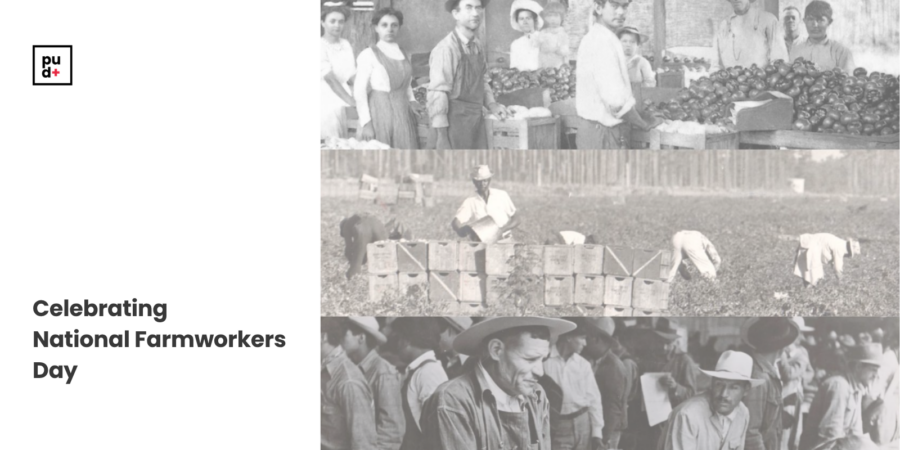
Much of Miami-Dade’s history exists in places and corridors people pass every day without realizing their significance.On National Farmworkers Day, it is important to recognize the individuals and communities whose labor has shaped South Florida in ways that often go unseen. For over a year, Plusurbia has been working closely with the Miami-Dade County Office of Historic Preservation on a Migrant Farmworkers Historic Context Study. The study includes extensive research, fieldwork, and community collaboration. To date, our team has identified 268 sites connected to migrant farmworker communities, from labor camps and housing to packing houses, commissaries, schools, churches, and local businesses.For the Plusurbia team, the story of migrant farmworkers is an important part of our history that needs to be told.Miami-Dade County's migrant farmworkers tell a story of resilience and diversity, with workers of American, Bahamian, Haitian, Mexican, Puerto Rican, and Caribbean ancestry who helped build the region’s agricultural and economic foundation. They also bring visibility to a history that has often been overlooked, despite its lasting impact on how Miami-Dade developed and continues to grow.At Plusurbia, we believe that knowing our history helps create a more inclusive and stronger foundation for the future.Learn more about the study here.
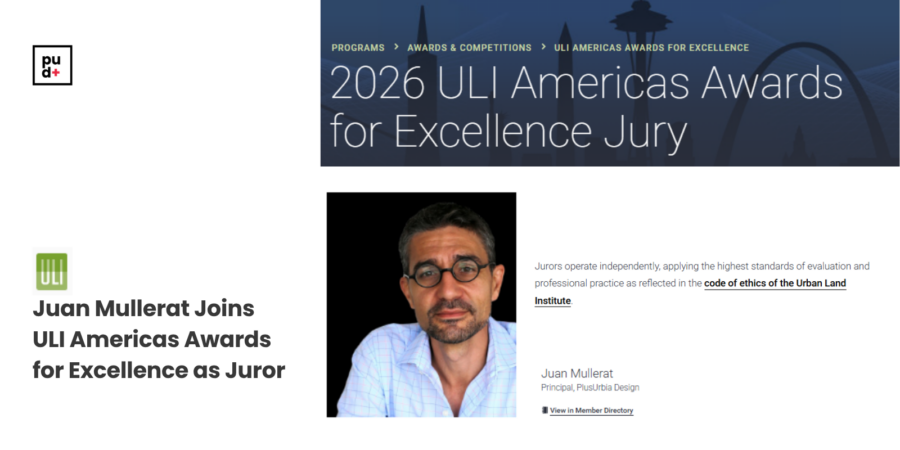
We’re proud to announce that Juan Mullerat, Founding Principal of Plusurbia Design, has been selected to serve as a juror for the Urban Land Institute Americas Awards for Excellence 2026.
ULI began the Awards for Excellence program in 1979 to recognize truly superior development efforts in the private, public, and nonprofit sectors. Winning projects represent the highest standards of achievement in the development industry—standards that ULI members deem worthy of attainment in their professional endeavors.
The jury brings together leaders from across the country to evaluate projects that are shaping how cities function and how they connect people, integrate nature, and respond to long-term social and environmental pressures.
A jury of ULI members chooses finalists and winners. Members of the jury are leaders who represent a broad geographic diversity and many areas of real estate and land use expertise, including finance, planning, development, public affairs, design, and professional services, among others.
In this role, Juan will help assess the ideas and approaches influencing the next generation of urban development, reflecting a broader shift toward more intentional and community-centered design.
His selection underscores Plusurbia’s continued focus on creating places that are grounded in context and designed to serve the communities around them.
We look forward to sharing perspectives from the process in the weeks ahead.Keep posted here.
Cities shape children long before children understand what a city is.
They walk on sidewalks that may be cracked or smooth. They wait at bus stops without knowing why some have benches, and others do not. They cross streets designed by people they will never meet. These decisions influence their safety, independence, and sense of belonging long before they have the language to describe them.
Yet conversations about planning are usually reserved for professionals. By the time most people encounter zoning, infrastructure, or civic process, their assumptions about how places work are already formed.
We believe planning literacy should begin earlier. Planning is not only a professional practice. It is also a civic skill.
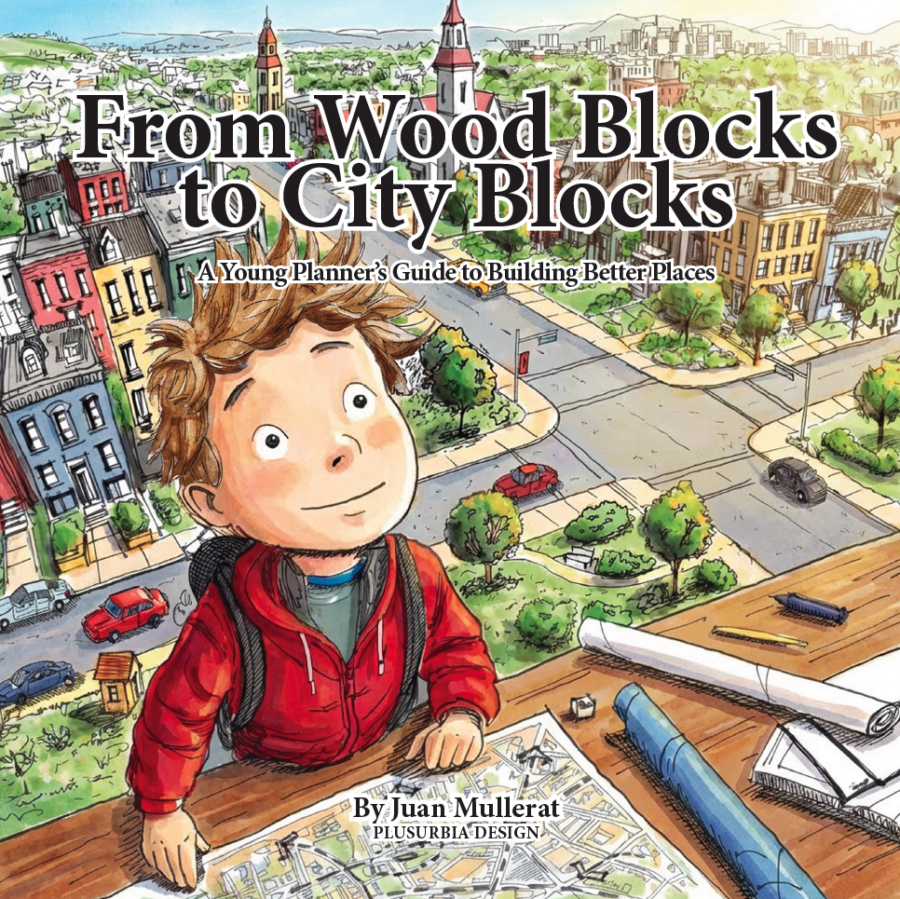
From Wood Blocks to City Blocks was created with that idea in mind. The book introduces young readers to the basic habits of good planning: observing, listening to others, identifying problems, and imagining practical improvements.
Over more than two decades of professional practice, our team has participated in charrettes, workshops, public meetings, and community engagement processes across many different settings. One pattern appears repeatedly. While public participation is encouraged, there are very few structured tools designed to involve children in meaningful ways. When children are included, their participation is often informal or symbolic. Yet children already experience the successes and failures of planning every day, often more directly than adults.
Yet children experience the public realm differently. They move at a different scale. They notice obstacles adults overlook. In workshops, they often point directly to problems in sidewalks, crossings, parks, and everyday infrastructure that professionals may have normalized.
For this reason, From Wood Blocks to City Blocks is not only a story, but it is also a practical engagement tool.
For planners. The book can support workshops, charrettes, and community engagement processes by providing activities that help children articulate what they observe and what they would change. For educators, it offers a framework for introducing civic responsibility, accessibility, and shared public space in language appropriate for younger audiences.
The story encourages children to observe closely, listen carefully, draw their ideas clearly, and begin with one small improvement. These habits mirror the fundamentals of responsible planning practice. Streets, parks, sidewalks, libraries, and schools are shared spaces. They belong to everyone. Understanding how cities work and how shared spaces can improve should not be limited to specialists or institutions.
For that reason, the digital edition of the book is offered freely. Planning knowledge should be accessible to the people who experience cities every day. It is shared under a Creative Commons license, allowing teachers, planners, educators, and community groups to use, print, share, and adapt it with attribution for non-commercial purposes. A low-cost print edition is also available for libraries, classrooms, workshops, and project teams that prefer a physical copy for public settings or community use.
Cities improve when more people are invited into the conversation. That invitation can begin early.
View the free digital edition, download the printable PDF, or order a print copy here.
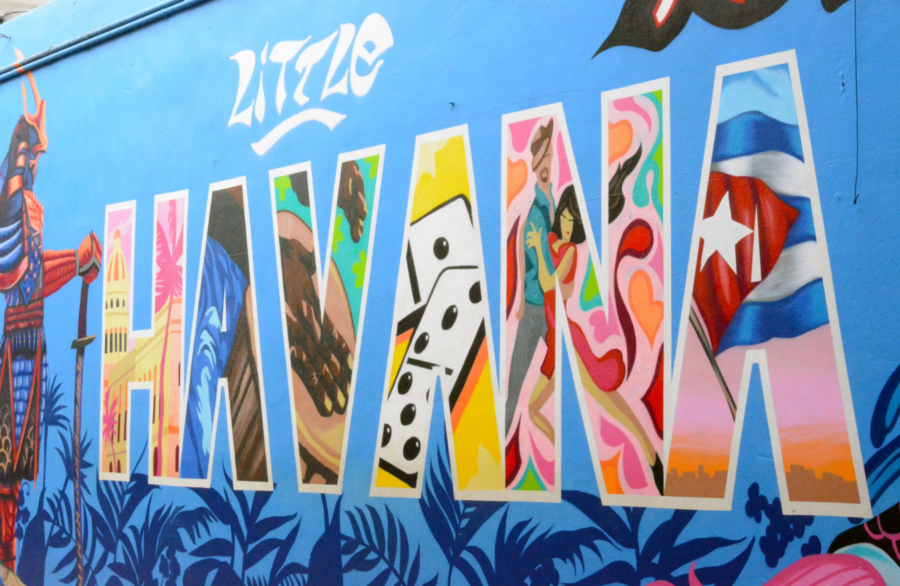
WLRN Public Media | By Sherrilyn CabreraPublished January 15, 2026 at 7:00 AM ESTCity leaders once lauded it as a bold vision for the future of one of Miami’s most famous streets and tourist destinations.When urban planning and design firm PlusUrbia unveiled its Calle Ocho Revitalization Plan in 2015, Miami city commissioners even went so far as to declare a day for the firm on Nov. 19 of that year. The plan laid out a reimagining of Little Havana’s SW 8th St — commonly known as Eighth Street or Calle Ocho, the Spanish translation — that aimed to bring a more pedestrian-friendly atmosphere.The vibrant cultural hub has been a bustling thoroughfare for decades, lined with shops, bars, and restaurants. It’s also home to renowned establishments like the historic Ball & Chain, Tower Theater, and the famous Domino Park — where mostly older Cuban residents gather to play dominoes while tourists watch. “Calle Ocho and Little Havana are the heart of Miami,” said Juan Mullerat, principal of PlusUrbia.The firm’s plan sought to build on that identity with a plan that visualized what Calle Ocho could look like — if cars did not dominate the wide, three-lane, one-way street. Instead, it would return the vibrant strip back into the two-way, two lane road it was before the late 1960s.The plan asks for expanded sidewalks, dedicated bike and bus lanes, and wider crosswalks that would be hard to miss. Instead of painted stripes on the road, a mural of giant dominoes would symbolize the crosswalks.“ By no means do we want to imply that Calle Ocho should be entirely pedestrian,” said Mullerat. “But if we're honest with ourselves … you experience great streets on foot. You don't experience them by car.”The plan got community input, too. Mullerat, along with Megan McLaughlin, PlusUrbia’s office director, spoke with residents and business owners about what they thought Calle Ocho needed.“All of our projects begin with community outreach, but also a lot of research into the culture and history of a community,” said McLaughlin. “What creates its DNA, what gives its identity?”“[The community is] continuing to advocate for greater walkability, safety,” she said. The firm also found that residents want to preserve the strip’s historic architecture.But since the introduction of the master plan a decade ago, the city has not picked up or signed off on any major changes to Little Havana’s Eighth Street.“ You always need a champion and you need that champion to stick with you for the longest possible period of time,” said Mullerat.Master plans for neighborhoods and cities, from idea to execution, take time, even decades. Meanwhile, politics tends to run in a four-year cycle. Urban planning and politics, Mullerat said, “are always at odds with each other.”
We use cookies
We use our own and third-party cookies to be able to correctly offer you all the functionalities of the website for analytical purposes. You can accept all cookies by clicking "Accept cookies", obtain more information in our
Website Policyor configure/reject their use by clicking on Settings".
Accept cookies
SettingsBasic cookie informationConfirm preferences
This website uses cookies and/or similar technologies that store and retrieve information when you browse. In general, these technologies can serve very different purposes, such as, for example, recognizing you as a user, obtaining information about your browsing habits or customizing the way in which the content is displayed. The specific uses we make of these technologies are described below. By default, all cookies are disabled, except for the technical ones, which are necessary for the website to work. If you wish to expand the information or exercise your data protection rights, you can consult our Website Policy.
Accept cookiesManage preferencesTechnical and/or necessary cookies
Always active
Technical cookies are those that facilitate user navigation and the use of the different options or services offered by the web such as identifying the session, allowing access to certain areas, filling in forms, storing language preferences, security, facilitating functionalities. (videos, social networks…).
Analytic Cookies
Analysis cookies are those used to carry out anonymous analysis of the behavior of web users and that allow user activity to be measured and navigation profiles to be created with the objective of improving websites.