Why We Wrote a Children’s Book About Cities
FEATURED, press, updates,
Published on
03/23/2026
03/23/2026
Cities shape children long before children understand what a city is.
They walk on sidewalks that may be cracked or smooth. They wait at bus stops without knowing why some have benches, and others do not. They cross streets designed by people they will never meet. These decisions influence their safety, independence, and sense of belonging long before they have the language to describe them.
Yet conversations about planning are usually reserved for professionals. By the time most people encounter zoning, infrastructure, or civic process, their assumptions about how places work are already formed.
We believe planning literacy should begin earlier. Planning is not only a professional practice. It is also a civic skill.
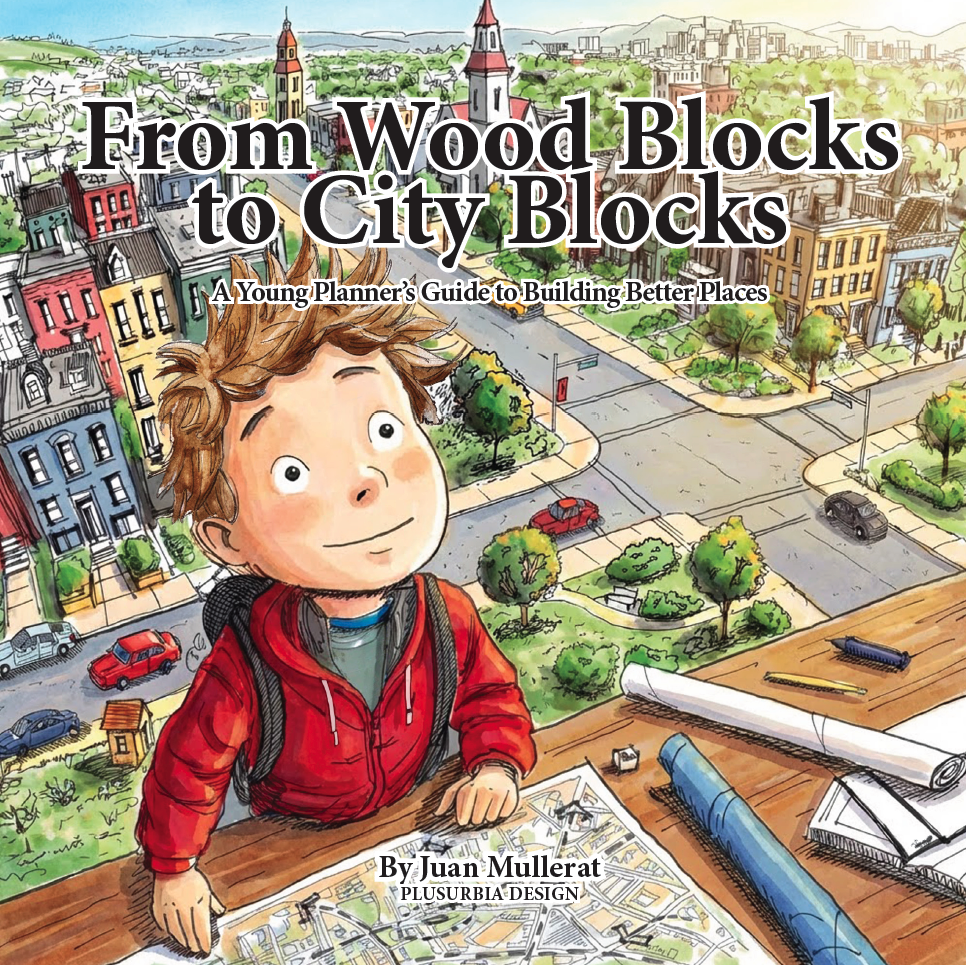
From Wood Blocks to City Blocks was created with that idea in mind. The book introduces young readers to the basic habits of good planning: observing, listening to others, identifying problems, and imagining practical improvements.
Over more than two decades of professional practice, our team has participated in charrettes, workshops, public meetings, and community engagement processes across many different settings. One pattern appears repeatedly. While public participation is encouraged, there are very few structured tools designed to involve children in meaningful ways. When children are included, their participation is often informal or symbolic. Yet children already experience the successes and failures of planning every day, often more directly than adults.
Yet children experience the public realm differently. They move at a different scale. They notice obstacles adults overlook. In workshops, they often point directly to problems in sidewalks, crossings, parks, and everyday infrastructure that professionals may have normalized.
For this reason, From Wood Blocks to City Blocks is not only a story, but it is also a practical engagement tool.
For planners. The book can support workshops, charrettes, and community engagement processes by providing activities that help children articulate what they observe and what they would change. For educators, it offers a framework for introducing civic responsibility, accessibility, and shared public space in language appropriate for younger audiences.
The story encourages children to observe closely, listen carefully, draw their ideas clearly, and begin with one small improvement. These habits mirror the fundamentals of responsible planning practice. Streets, parks, sidewalks, libraries, and schools are shared spaces. They belong to everyone. Understanding how cities work and how shared spaces can improve should not be limited to specialists or institutions.
For that reason, the digital edition of the book is offered freely. Planning knowledge should be accessible to the people who experience cities every day. It is shared under a Creative Commons license, allowing teachers, planners, educators, and community groups to use, print, share, and adapt it with attribution for non-commercial purposes. A low-cost print edition is also available for libraries, classrooms, workshops, and project teams that prefer a physical copy for public settings or community use.
Cities improve when more people are invited into the conversation. That invitation can begin early.
View the free digital edition, download the printable PDF, or order a print copy here.